
Sub-Total: €0.00
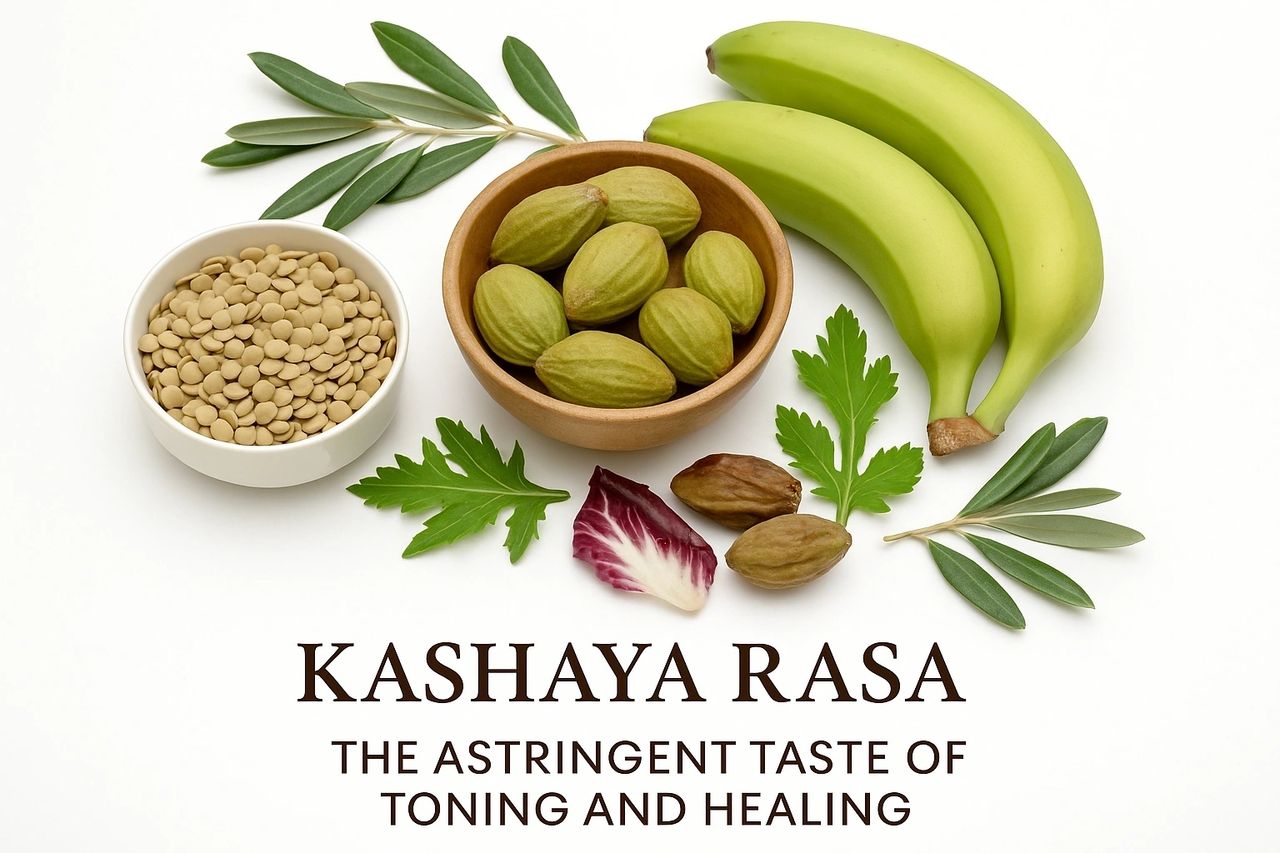
Kashaya Rasa – The Astringent Taste of Toning and Healing
By Smita Daya, Ayurveda Practitioner
Subtle, dry, and often overlooked, Kashaya Rasa — the astringent taste — is the quiet healer among Ayurveda’s six rasas. Unlike the more obvious tastes of sweet, salty, or sour, astringency is felt more than tasted: it creates a drying, puckering sensation in the mouth, tightening tissues and absorbing moisture.
In both Ayurveda and Mediterranean food traditions, astringent foods play a key role in toning, cleansing, and restoring balance — especially after indulgence or during detoxification.
Elemental Composition
Kashaya Rasa is composed of:
- Air (Vayu) – Lightness, dryness, subtlety
- Earth (Prithvi) – Heaviness, stability, structure
Together, these make the taste cooling, dry, and heavy — a combination that grounds and tightens, yet also absorbs and restricts.
Ayurvedic Properties (Gunas) & Actions (Karma)

Doshic Effects
Dosha Effect of Kashaya Rasa
Vata Increases – due to drying and constricting nature
Pitta Decreases – cools and soothes heat
Kapha Decreases – absorbs excess moisture and mucus
Kashaya Rasa is excellent for Pitta and Kapha imbalances, particularly when there’s inflammation, heaviness, or sluggishness. It can, however, aggravate Vata if used excessively or without moistening, grounding foods.
Health Benefits of Kashaya Rasa
- Tones and tightens tissues – Ideal for post-illness recovery or after childbirth
- Reduces bleeding and inflammation – Especially in ulcers or skin conditions
- Stops diarrhea and excessive flow – A natural styptic and stabilizer
- Supports wound healing – Internally and externally
- Detoxifies blood and clears skin
- Improves oral and gum health – Many astringents are found in Ayurvedic dental care
Astringency is nature’s pause — helping us draw inward, dry excess, and restore boundaries.
Contraindications: When to Use With Caution
Too much Kashaya Rasa may lead to:
- Constipation or dryness of the colon
- Gas and bloating (especially in Vata types)
- Dry skin, lips, and throat
- Poor nutrient absorption
- Feeling restricted, tight, or emotionally withdrawn
For Vata types or during dry seasons, always pair astringent foods with oils, warming spices, or moist cooked dishes.
Natural Sources of Kashaya Rasa
Ayurvedic:
- Green banana
- Pomegranate peel or unripe seeds
- Turmeric (mildly astringent and bitter)
- Legumes (especially lentils, mung beans, chickpeas)
- Plantain
- Haritaki (one of the Triphala herbs)
Mediterranean:
- Lentils, chickpeas, and broad beans
- Green tea and black tea
- Raw cranberries or unripe persimmons
- Grape leaves
- Red wine (dry tannins)
- Olive leaves or olive tea
- Artichoke (slightly astringent and bitter)
Try this: A warm lentil soup with olive oil, turmeric, and fennel seeds — grounding, gently astringent, and easy to digest.
Kashaya Rasa is the taste of refinement — quiet, stabilizing, and deeply cleansing. It teaches us the power of pulling back, toning down, and healing from within.
“In the stillness of the astringent taste, the body remembers how to restore itself.”
That’s a Wrap: The Six Tastes Complete!
With Kashaya Rasa, we complete our exploration of the six Ayurvedic tastes, each one with its own energy, effect, and emotional signature. Together, they form a system of healing through food that is intuitive, seasonal, and deeply personal.
Closing Reflections
I hope you’ve enjoyed this journey through the Ancient Wisdom, Modern Wellness – one taste, one ritual, and one mindful bite at a time – Six Tastes of Ayurveda—from the nourishing sweetness of Madhura to the detoxifying bitterness of Tikta and the toning astringency of Kashaya. Each taste carries its own wisdom, purpose, and healing potential, reminding us that food is more than sustenance—it is a powerful pathway to balance, vitality, and awareness.
Whether you’re just beginning your exploration of Ayurveda or deepening a long-standing practice, may this series inspire you to eat with presence, live with purpose, and honor the ancient intelligence within each bite.
I’d truly love to hear your thoughts on this 7-part blog series. Feel free to reach out to me via email.
With gratitude,
Smita
Stay tuned for more insights on Ayurveda, mindful living, and holistic wellness..