
Sub-Total: €0.00
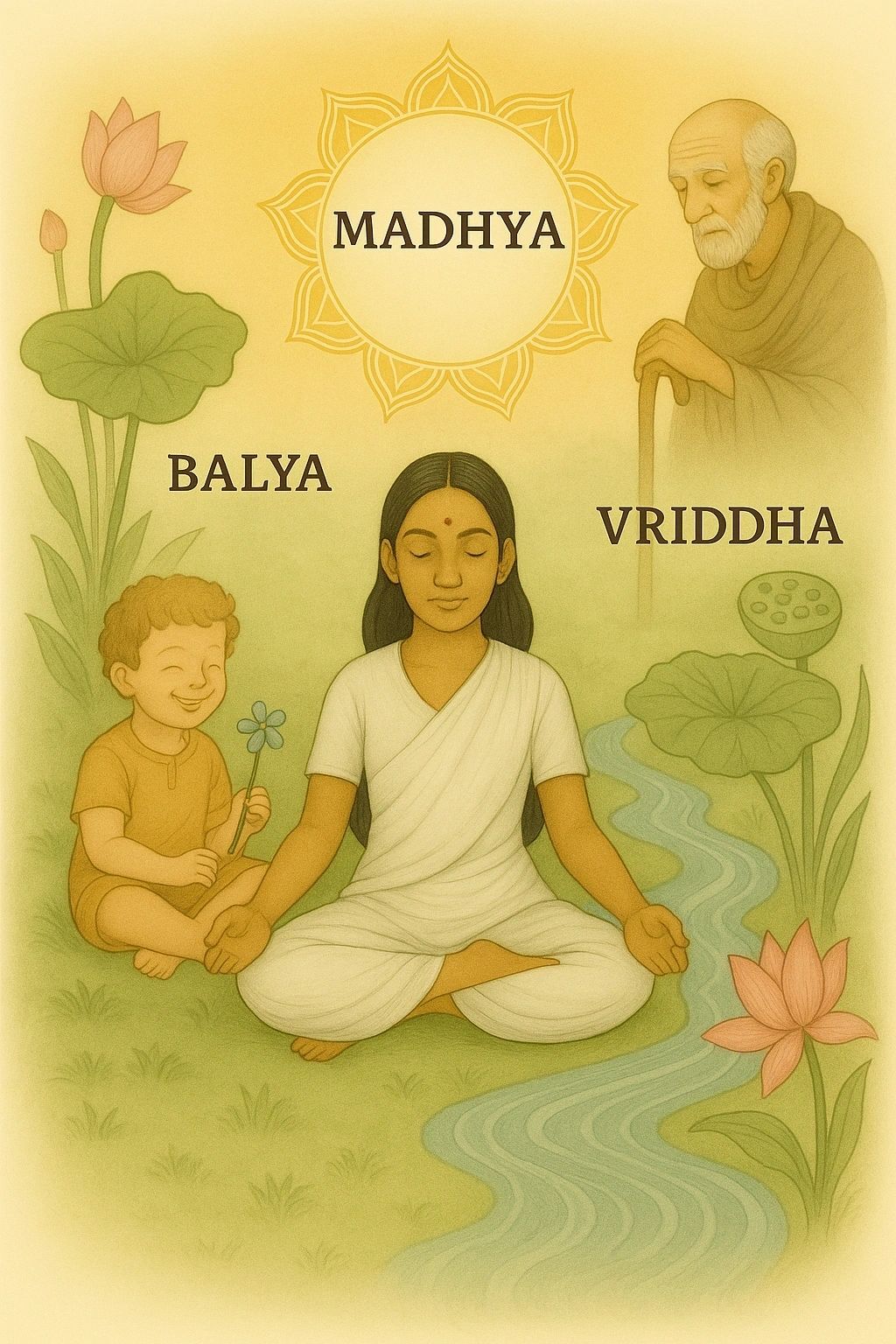
The Three Stages of Life: A Dosha-Based Perspective
The Three Stages of Life According to Acharya Sushruta: A Dosha-Based Perspective
Ancient Ayurvedic wisdom is timeless in its understanding of human life. Among the sages who articulated this deep science, Acharya Sushruta, the father of surgery and a master of holistic health, offered a profound view of life in stages, each governed by a specific dosha, the vital bio-energies of the body: Vata, Pitta, and Kapha.
Understanding these three stages of life: Balya (childhood), Madhya (adulthood), and Vriddha (old age), through the lens of doshas not only helps us comprehend how our bodies and minds change over time but also teaches us how to live in harmony with nature’s rhythm.
1. Balya Avastha (Childhood): The Kapha Stage
Age range: Birth to 16 years
Dominant dosha: Kapha
Keywords: Growth, stability, nourishment
Childhood is the phase of building the body; bones, tissues, organs, and immunity are all under development. According to Sushruta, Kapha dosha dominates this stage, giving rise to the qualities of moisture, softness, heaviness, and steadiness, all essential for nourishment and physical growth.
Characteristics:
- Chubby cheeks, soft skin, strong bonding
- Tendency toward colds, coughs, congestion (Kapha-related disorders)
- Curiosity, playfulness, high energy, but quick tiredness
Lifestyle & Diet Tips:
- Warm, light, easily digestible foods to balance excess Kapha
- Daily routines (Dinacharya) to instill rhythm and discipline
- Outdoor play, gentle yoga, and emotional nurturing
2. Madhya Avastha (Adulthood): The Pitta Stage
Age range: 16 to 60 years
Dominant dosha: Pitta
Keywords: Transformation, ambition, responsibility
This is the prime of life, when we are most active physically, mentally, and emotionally. Sushruta emphasized that Pitta, the dosha of fire and transformation, rules this stage. It governs digestion, metabolism, intellect, and ambition, all necessary to navigate responsibilities, careers, relationships, and self-realization.
Characteristics:
- Strong digestion, sharper intellect
- Higher emotional intensity, passion, drive, anger, and focus
- Common issues: ulcers, inflammation, irritability
Lifestyle & Diet Tips:
- Cooling foods (like cucumbers, mint, and coconut water)
- Regular breaks to avoid burnout
- Mindful practices like meditation and journaling to calm the Pitta fire
3. Vriddha Avastha (Old Age): The Vata Stage
Age range: 60 years and above
Dominant dosha: Vata
Keywords: Decline, dryness, wisdom
As we age, the qualities of Vata dosha: dryness, lightness, movement, become dominant. This stage is marked by a natural decline in tissue regeneration, strength, and mobility. Memory may become irregular, digestion weaker, and there is a tendency toward anxiety, insomnia, and joint disorders.
Characteristics:
- Dry skin, brittle bones, fragile digestion
- Increased fear or worry, spiritual inclination
- Prone to arthritis, constipation, insomnia (Vata disorders)
Lifestyle & Diet Tips:
- Warm, oily, grounding foods (like soups, ghee, root vegetables)
- Consistent sleep and meal routines
- Gentle stretching, oil massage (Abhyanga), and spiritual practices
Living in Tune with Your Stage of Life
By understanding which dosha governs each life phase, we can adjust our lifestyle, diet, mindset, and routines accordingly. Acharya Sushruta’s framework encourages us not just to treat symptoms but to live in proactive balance, adapting with awareness at every milestone of life.
Life, according to Ayurveda, is a dynamic journey. Sushruta’s insight into Balya, Madhya, and Vriddha Avastha reminds us that health is not just the absence of disease; it’s the art of aligning with nature’s rhythm.
When we honor the dosha that governs our current life stage, we don’t just preserve our health; we enhance the quality, joy, and meaning of life.