
Sub-Total: €0.00
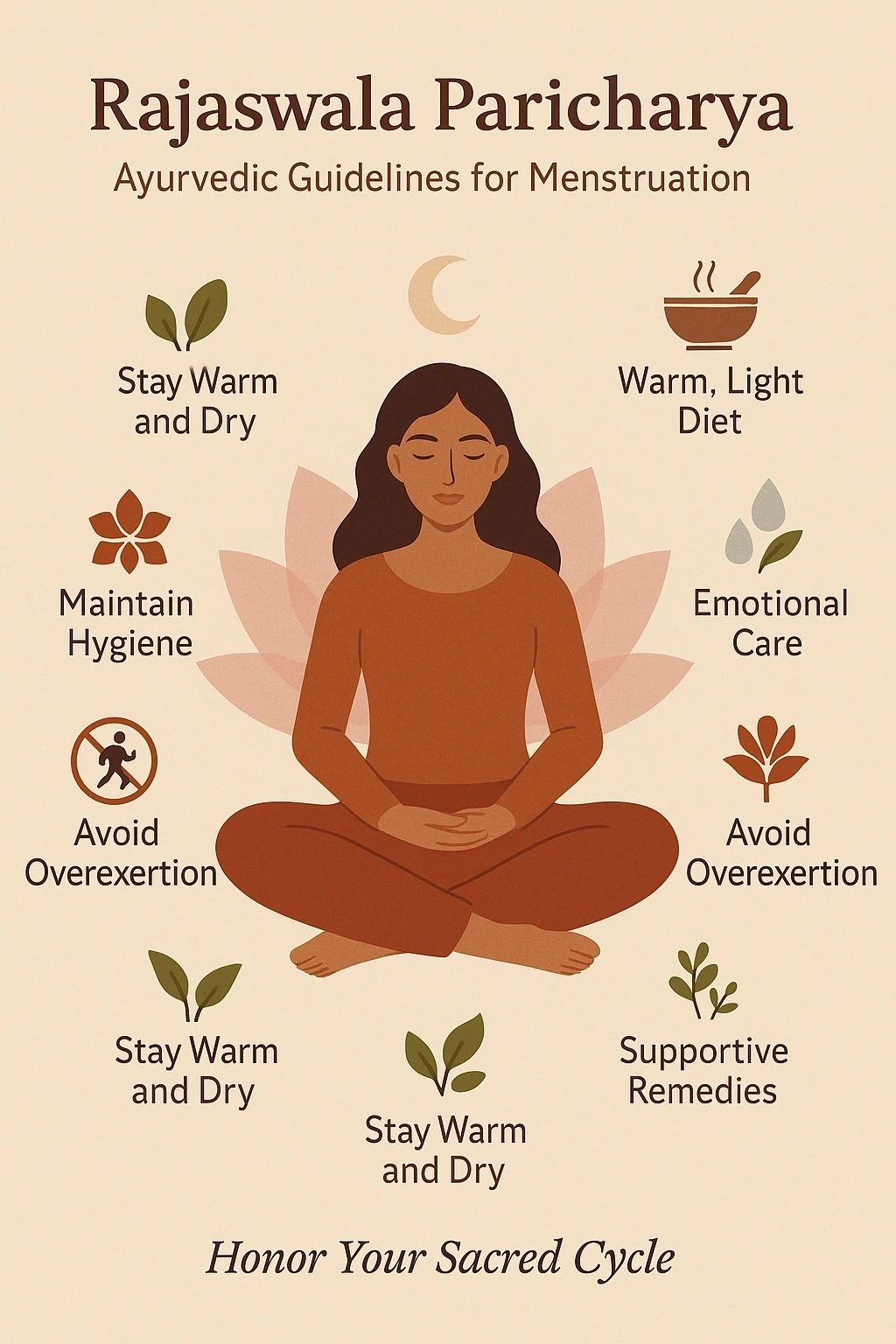
Nurturing Yourself During Menstruation: Ayurveda’s Timeless Guide
In the ancient science of Ayurveda, menstruation is seen as a sacred and natural cleansing process — a time when a woman’s body, mind, and spirit require extra care and attention. The traditional practices known as Rajaswala Paricharya provide a holistic guide to nurturing well-being during the menstrual cycle.
Derived from the Sanskrit words “Rajas” (menstrual blood) and “Wala” (one who possesses), Rajaswala Paricharya refers to the recommended lifestyle, dietary, and emotional care practices for women during menstruation. By following these guidelines, women can support the body’s detoxification, balance their doshas (Vata, Pitta, and Kapha), and promote overall physical, mental, and emotional health.
Let’s explore the key aspects of Rajaswala Paricharya and how they can be applied in today’s world.
1. Embracing Rest and Relaxation
During menstruation, the body undergoes profound internal processes. Ayurveda encourages women to slow down and conserve energy. Strenuous activities should be avoided in favor of gentle movement like walking or light stretching.
Why rest matters:
Resting allows the body to direct energy toward the natural cleansing and healing taking place, reducing the risk of imbalance or discomfort.
2. Nourishing Through the Right Diet
Warm, light, and easy-to-digest foods are emphasized during menstruation. Think soothing soups, porridge’s, and stews — all freshly cooked and served warm.
Foods to favor:
- Iron-rich foods like leafy greens, sesame seeds, and lentils to replenish nutrients.
- Herbal teas like ginger or cinnamon for warmth and digestion.
- Hydrating fluids to support the detox process.
Foods to avoid:
- Heavy, oily, or spicy meals that can aggravate the Pitta dosha, leading to bloating, cramps, and irritability.
- Cold or raw foods that can disturb digestion and vitiate the Vata dosha.
3. Maintaining Hygiene and Cleanliness
Ayurveda stresses the importance of personal hygiene during menstruation. Regular bathing with warm (not cold) water is recommended to refresh the body and maintain the balance of the doshas.
Tips:
- Choose natural, breathable menstrual products to avoid irritation.
- Keep the body clean and dry to prevent infections and promote comfort.
4. Emotional and Mental Care
Hormonal changes during menstruation can impact emotional well-being. Ayurveda advises women to seek peaceful and nurturing environments during this time.
Support emotional health by:
- Practicing meditation, mindfulness, or gentle breathing exercises.
- Engaging in restorative yoga or pranayama.
- Avoiding emotionally intense situations or excessive mental exertion.
5. Avoiding Overexertion
Overworking the body during menstruation can lead to increased fatigue, cramps, or heavier bleeding. Ayurveda recommends limiting physical and mental exertion, including refraining from sexual activity, to allow the body to recover fully.
6. Supporting the Reproductive System
Certain Ayurvedic herbs and practices can naturally support the reproductive system during menstruation.
Helpful remedies include:
- Herbal supplements like ashwagandha, shatavari, turmeric, and ginger to ease cramps and balance hormones.
- Warm compresses or heating pads to soothe abdominal discomfort.
7. Staying Warm and Dry
Exposure to cold and damp environments can disturb the body’s delicate balance during menstruation. Ayurveda recommends staying warm and dry, which helps maintain the healthy flow of the cycle and prevents the aggravation of Vata dosha.
8. Cultivating Spiritual Balance
Ayurveda also recognizes the spiritual significance of menstruation. Women are encouraged to engage in practices that foster inner peace, such as chanting mantras, meditating, or offering simple prayers. Honoring this time as sacred promotes a deeper connection with one’s body and spirit.
A Summary of Rajaswala Paricharya Guidelines:
- Prioritize rest and relaxation.
- Eat light, warm, and nourishing foods.
- Maintain hygiene with warm water baths.
- Avoid physical overexertion.
- Stay hydrated and choose soothing herbal teas.
- Support emotional balance with mindful practices.
- Keep warm and avoid exposure to cold or wet environments.
- Utilize herbal remedies and warm compresses for comfort.
Embracing the Sacred Cycle
Rajaswala Paricharya reminds us that menstruation is not merely a biological event but a powerful natural process that deserves care, respect, and nurturing. By adopting these ancient Ayurvedic practices, women can transform their menstrual experience into a time of healing, reflection, and inner balance.
Listening to the body’s needs during this phase allows for greater harmony — physically, emotionally, and spiritually.