
Sub-Total: €0.00
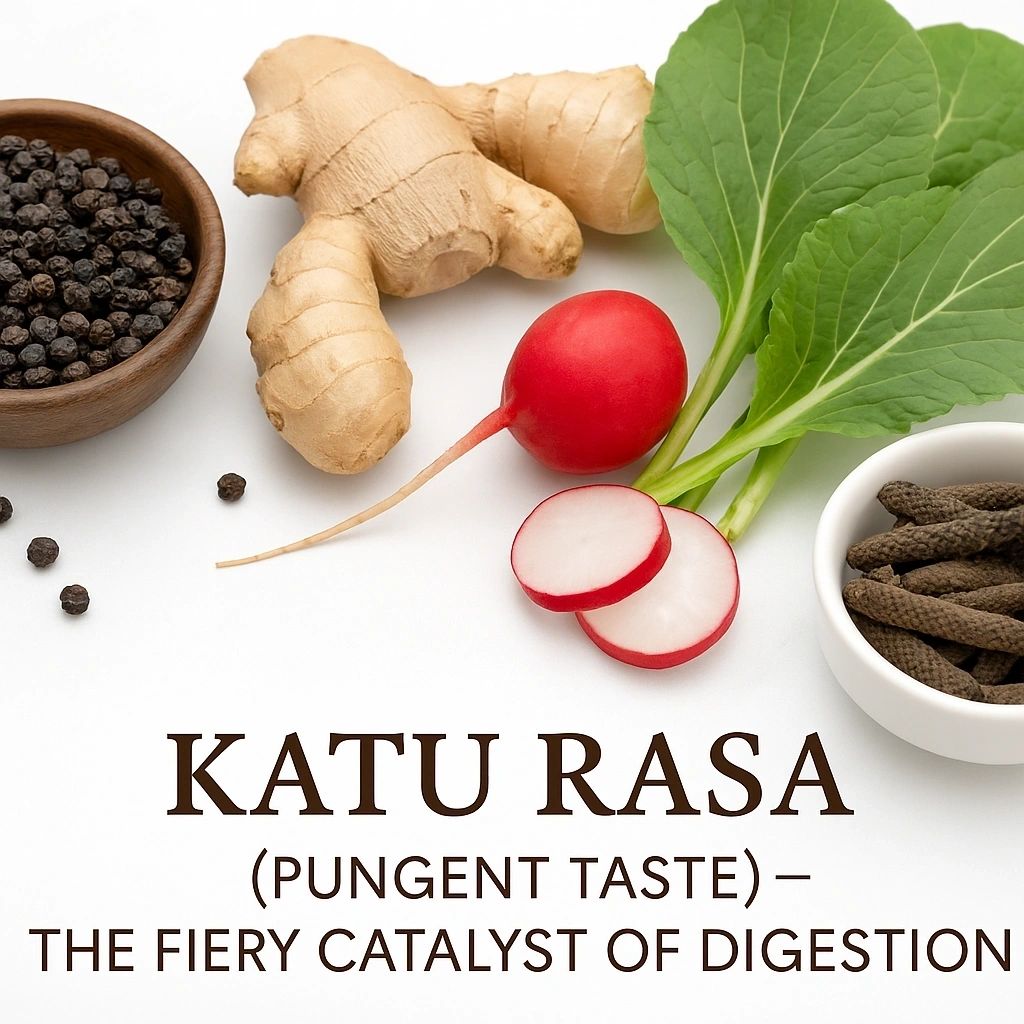
Katu Rasa (Pungent Taste) – The Fiery Catalyst of Digestion
By Smita Daya, Ayurveda Practitioner
In Ayurveda, taste is medicine. Each of the six rasas (tastes) offers specific effects on our body, mind, and digestion. Among them, Katu Rasa — the pungent taste — is the boldest, most stimulating, and deeply transformative.
Let’s explore the health benefits, properties, doshic effects, and sources of Katu Rasa, and when to use it with care.
What Is Katu Rasa?
Katu Rasa is the sharp, spicy, and stimulating taste found in ingredients like ginger, garlic, black pepper, mustard, and chili. It ignites digestive fire, clears stagnation, and energizes the system.
Elemental Composition
Katu Rasa is made up of:
- Agni (Fire) – Brings heat, transformation, and intensity
- Vayu (Air) – Adds movement, dryness, and sharpness
This makes the taste inherently hot, light, dry, and mobile in its effect.
Ayurvedic Properties (Gunas) & Actions (Karma)

Doshic Effects:
Dosha Effect of Katu Rasa
Vata Increases – due to dryness and mobility
Pitta Increases – due to heat and sharpness
Kapha Decreases – balances heaviness, coldness, and mucus
Best for Kapha types, who benefit from stimulation and detoxification. Used with caution for Vata and Pitta.
Health Benefits of Katu Rasa
- Boosts digestion (Agni)
- Breaks down Ama (toxins)
- Clears sinuses and congestion
- Improves circulation and metabolism
- Stimulates appetite
- Enhances mental clarity and alertness
Contraindications: When to Use With Caution
Overuse of pungent taste can lead to:
- Dryness in the skin, lips, and joints
- Heartburn or acidity, especially in Pitta types
- Restlessness, anxiety, or insomnia, especially in Vata
- Excess sweating or skin irritation
- Worsening of menstrual issues or infertility – Too much heat in reproductive tissues can disrupt fertility, especially in Pitta-dominant individuals
- Pregnancy – Pungent taste increases Apana Vata (downward energy) and heat, both of which are contraindicated during pregnancy. Use sparingly or avoid altogether.
During pregnancy or when trying to conceive, opt for cooling, nourishing foods and gentle spices like fennel, cardamom, or turmeric.
Natural Sources of Katu Rasa
Ayurveda Favorites:
- Fresh and dry ginger
- Black pepper
- Pippali (long pepper)
- Garlic
- Mustard seeds
- Asafoetida (hing)
- Green and red chilies
Mediterranean Sources:
- Raw garlic
- Red onions
- Arugula (rocket)
- Radish
- Mustard greens
- Horseradish
- Chili oil, harissa, and olive tapenade with garlic
Try this: Toss arugula with olive oil, a squeeze of lemon, and a dash of black pepper for a pungent, digestive-supportive salad.
Katu Rasa is powerful medicine — it awakens digestion, clears stagnation, and brings vitality when used with awareness. But its sharp, dry, and hot qualities must be balanced, especially in those who are already fiery (Pitta) or dry and light (Vata).
“Let your food be sharp enough to awaken you — but not so sharp it burns your balance.”
Stay tuned for Part 6 as we continue our Ancient Wisdom, Modern Wellness journey — one taste, one ritual, and one mindful bite at a time: Next in the Series: Tikta Rasa (Bitter Taste) – The Cleanser of Body and Mind