
Sub-Total: €0.00
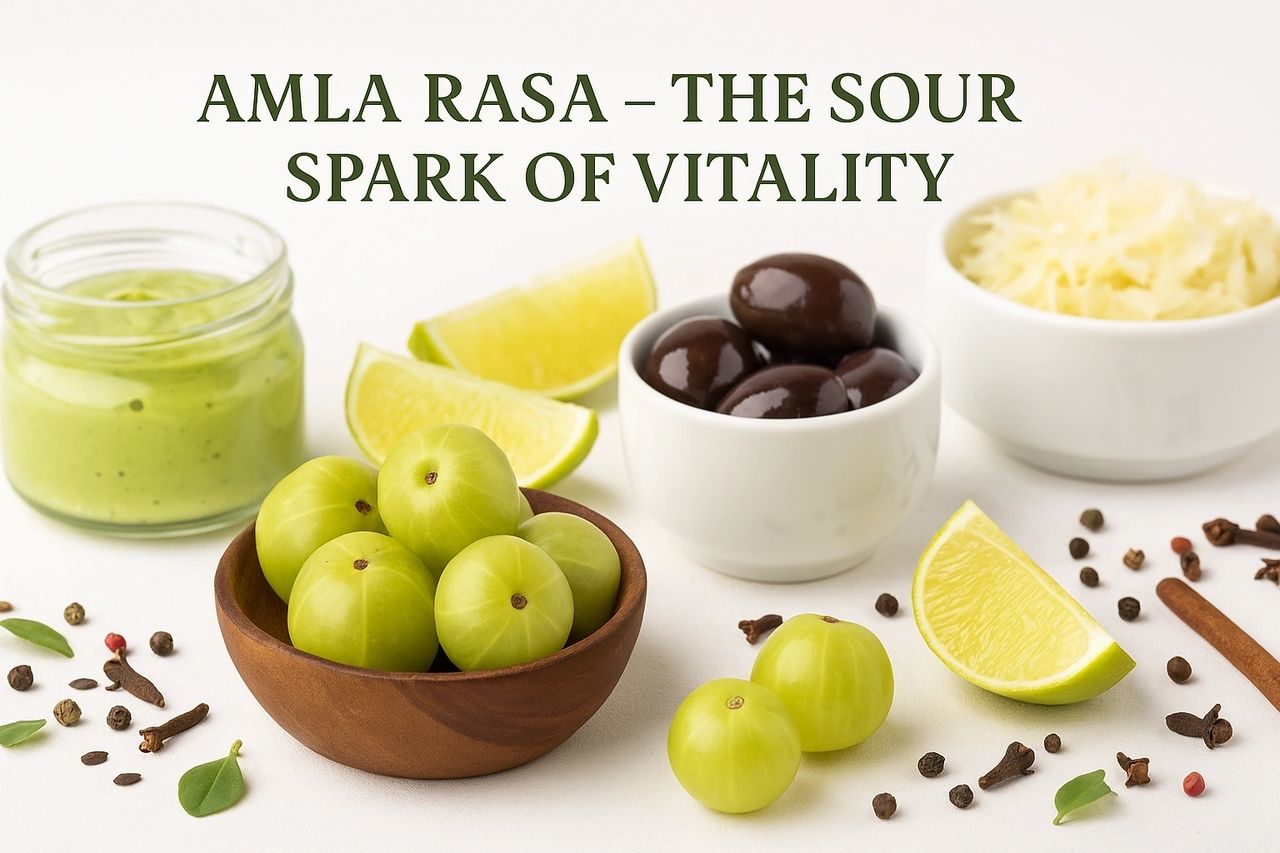
Amla Rasa – The Sour Spark of Vitality
By Smita Daya, Ayurveda Practitioner
Sourness wakes us up. It makes us salivate, stimulates digestion, and sparks the senses. In Ayurveda, this tangy, zesty, and bright taste is known as Amla Rasa — the sour taste, one of the six vital rasas that nourish both body and mind.
Much like a squeeze of lemon over a Mediterranean salad, Amla Rasa cuts through heaviness and dullness. When used wisely, it refreshes, energizes, and revives — making it a powerful ally in daily wellness.
Elemental Composition
Amla Rasa is made of:
- Earth (Prithvi) – Brings grounding and structure
- Fire (Agni) – Brings warmth and stimulation
This gives it a hot, light, moist, and oily quality — energizing but also softening.
Ayurvedic Properties (Gunas) & Actions (Karma)

Doshic Effects
Dosha Effect of Amla Rasa
Vata Decreases – adds moisture and warmth
Pitta Increases – too much heat and acidity
Kapha Slightly increases, depending on moisture and heaviness
Best for Vata, balancing its dry, cold nature. It can aggravate Pitta due to its heating and acidic effects, and should be used mindfully for Kapha if heavy or fermented.
Health Benefits of Amla Rasa
- Stimulates digestion – Awakens taste buds and digestive fire
- Enhances nutrient absorption – Prepares the body to assimilate food
- Increases salivation – Aids breakdown of food
- Promotes clarity and alertness – Sharpens the senses
- Supports healthy elimination – Prevents constipation
- Energizes the mind – Reduces lethargy and heaviness
Contraindications: When to Use With Caution
In excess, sour taste can lead to:
- Acidity, heartburn, and inflammation (especially in Pitta types)
- Skin conditions like rashes or acne
- Excess thirst or sweating
- Irritability or impatience (mental sharpness turning agitative)
- Tooth sensitivity or enamel erosion
Amla Rasa should be minimized in conditions of high heat, acidity, or inflammatory disorders, especially in summer or for fiery constitutions.
Natural Sources of Amla Rasa
Ayurvedic:
- Amla (Indian gooseberry) – tridoshic and highly revered
- Tamarind
- Lemon and lime
- Fermented foods (yogurt, vinegar, kombucha)
- Green mango
- Pomegranate juice (slightly sour when unripe)
Mediterranean:
- Lemon and citrus fruits
- Vinegars (balsamic, red wine, apple cider)
- Olives and capers
- Feta and yogurt
- Sumac and pickled vegetables
- Fermented dairy (like kefir or labneh)
Drizzle lemon juice and olive oil over grilled vegetables or lentils — a Mediterranean-Ayurvedic combo that uplifts digestion and mood.
Amla Rasa reminds us that vitality sometimes comes from contrast — a little sharpness, a little brightness, a little zing. It stimulates what has gone dull, both inside and out.
But as with all potent tastes, balance is key.
“Let sourness awaken you, but not overwhelm you — it’s meant to spark, not scorch.”
Stay tuned for Part 4 as we continue our Ancient Wisdom, Modern Wellness journey — one taste, one ritual, and one mindful bite at a time: Next in the Series: Lavana Rasa – The Salty Taste That Grounds and Replenishes.