
Sub-Total: €0.00
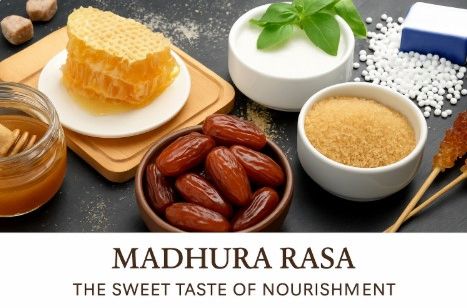
Madhura Rasa – The Sweet Taste of Nourishment
By Smita Daya, Ayurveda Practitioner
In both Ayurveda and the Mediterranean lifestyle, sweetness is not just a flavor — it’s a feeling. It’s the warmth of sun-ripened fruit, the comfort of a shared meal, the calm of a slow morning. In Ayurveda, this taste is known as Madhura Rasa, the first and most nourishing of the six tastes.
More than sugar or dessert, Madhura Rasa is found in the natural sweetness of life — and when used correctly, it builds strength, soothes the mind, and deeply nourishes the body.
Elemental Composition
Madhura Rasa is made up of:
- Earth (Prithvi) – Brings heaviness, stability, and grounding
- Water (Jala) – Offers softness, lubrication, and cohesion
This makes sweet taste cooling, heavy, moist, and strengthening in nature.
Ayurvedic Properties (Gunas) & Actions (Karma)

Doshic Effects:
Dosha Effect of Madhura Rasa
Vata Decreases – cools and soothes heat and intensity, stability
Pitta Decreases – cools and soothes heat and intensity
Kapha Increases – adds heaviness, moisture, and stagnation
Madhura Rasa is best for Vata and Pitta, but should be used moderately in Kapha types, especially those prone to sluggish digestion, weight gain, or congestion.
Health Benefits of Madhura Rasa
- Builds Ojas – The essence of immunity and vitality
- Nourishes all seven dhatus (body tissues) — from plasma to reproductive
- Calms the nervous system — reduces stress and anxiety
- Promotes fertility and hormonal balance
- Supports skin glow and hair health
- Encourages compassion, patience, and love
- Enhances longevity and recovery
Contraindications: When to Use With Caution
Too much sweet taste, especially from refined or artificial sources can cause:
- Weight gain and sluggish digestion
- Mucus accumulation and congestion
- High blood sugar or diabetes risk
- Lethargy, dullness, or emotional attachment
- Increased Kapha-related imbalances like candida, sinus issues, or emotional heaviness
Not all sweetness is equal. In Ayurveda, wholesome sweet taste comes from whole grains, fruits, milk, dates, and root vegetables — not refined sugars or processed foods.
Natural Sources of Madhura Rasa
Ayurvedic:
- Dates, figs, raisins
- Ghee
- Rice, wheat, and mung dal
- Sweet root veggies (carrots, beets, sweet potatoes)
- Milk and almond milk
- Honey (in moderation and never heated)
- Shatavari or licorice root
Mediterranean:
- Ripe seasonal fruits (grapes, figs, melons, apricots)
- Cooked grains (barley, farro, rice)
- Honey and carob
- Fennel and anise (light sweet herbs)
- Greek yogurt
- Olive oil with soft, warm bread
A bowl of cooked farro with warm milk, cardamom, and chopped dates is a beautiful way to blend Mediterranean and Ayurvedic Madhura Rasa — comforting, sattvic, and nourishing.
Madhura Rasa teaches us the beauty of slowness, softness, and sweetness, not only in taste, but in the way we live. In a world that often glorifies speed and sharpness, the sweet taste offers us a chance to pause, receive, and be nourished.
“Let sweetness be a way of living — not a craving, but a connection to what sustains us.”
Stay tuned for Part 3 as we continue our Ancient Wisdom, Modern Wellness journey — one taste, one ritual, and one mindful bite at a time: Next in the Series: Amla Rasa – The Sour Spark of Vitality.