
Sub-Total: €0.00
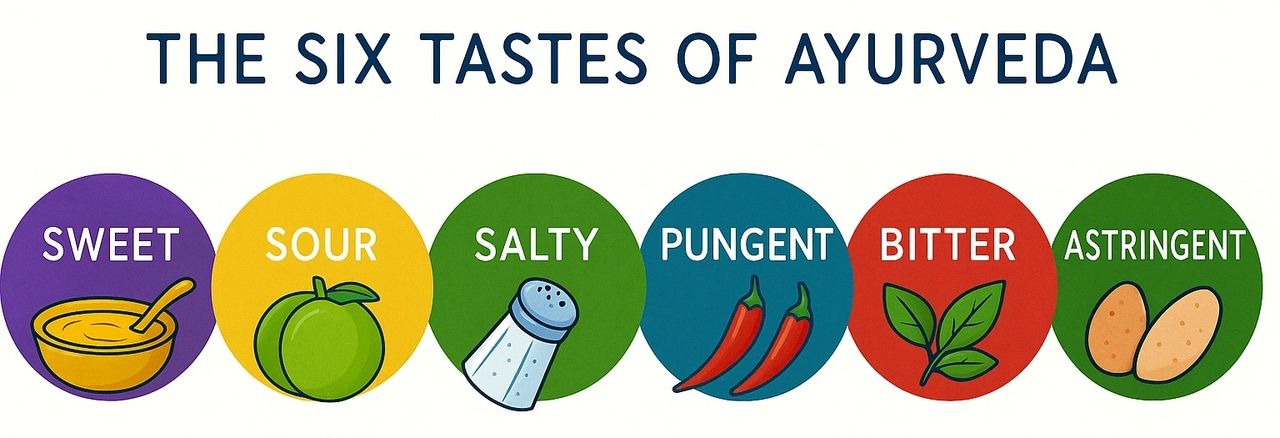
Unlocking the Wisdom of Shaad Rasa – The Six Tastes of Ayurveda
By Smita Daya, Ayurveda Practitioner
Ayurveda, the timeless science of life, teaches us that food is much more than fuel—it’s a form of medicine. At the heart of Ayurvedic nutrition lies Shaad Rasa or the Six Tastes, which guide how food interacts with our body, mind, and energy.
These tastes don’t just influence flavor—they affect digestion, emotions, and the balance of the three doshas: Vata, Pitta, and Kapha.
What Are the Six Tastes (Shaad Rasa)?
According to Ayurveda, every food item contains one or more of these six tastes:

Each taste contributes to physical nourishment and mental-emotional balance.
1. Madhura (Sweet)
- Qualities: Nourishing, calming, cooling
- Benefits: Promotes tissue growth, immunity, and vitality
- Examples: Rice, wheat, milk, dates, ghee
- Excess Leads To: Weight gain, sluggishness, attachment
2. Amla (Sour)
- Qualities: Energizing, light, heating
- Benefits: Stimulates digestion, clears stagnation
- Examples: Citrus fruits, yogurt, pickles
- Excess Leads To: Acidity, irritability, thirst
3. Lavana (Salty)
- Qualities: Moistening, heavy, heating
- Benefits: Improves taste, aids mineral absorption
- Examples: Sea salt, rock salt
- Excess Leads To: Water retention, high blood pressure
4. Katu (Pungent)
- Qualities: Drying, light, hot
- Benefits: Clears sinuses, increases circulation
- Examples: Chili, black pepper, mustard, garlic
- Excess Leads To: Inflammation, aggression, dryness
5. Tikta (Bitter)
- Qualities: Light, cool, dry
- Benefits: Detoxifies, kills parasites, clears heat
- Examples: Neem, bitter gourd, turmeric
- Excess Leads To: Weakness, dizziness, dryness
6. Kashaya (Astringent)
- Qualities: Cooling, drying, firming
- Benefits: Heals wounds, tightens tissues
- Examples: Raw banana, lentils, green tea, pomegranate
- Excess Leads To: Constipation, dryness, emotional withdrawal
Why Balance All Six Tastes?
Incorporating all six tastes into your meals helps:
- Stimulate the entire digestive process
- Promote emotional equilibrium
- Maintain dosha harmony
A typical Ayurvedic meal includes all six tastes in a balanced, intentional way, often starting sweet and ending with pungent or astringent.

Practical Tips for Your Plate
- Include herbs and spices like ginger, cumin, turmeric, and coriander
- Vary your diet with seasonal fruits and vegetables
- Know your prakriti (constitution) and favor tastes that balance your dosha
- Use digestive teas with bitter or pungent notes after heavy meals
Taste is Your Inner Guide
Ayurveda teaches us to befriend our senses. The Six Tastes are not just a guide to what we eat—they are a guide to how we live, love, heal, and grow. Next time you prepare or savor a meal, ask: What rasa am I nourishing today?
Stay tuned for more posts in the Ancient Wisdom, Modern Wellness series – blending Ayurvedic insight with Mediterranean flavor and lifestyle, as we continue to explore the six tastes, their healing power, how to balance them with Mediterranean foods, and how to use them to craft a more intentional, joyful, and natural life.